|
Home Updates Hydros Cars Engines Contacts Links Contact On The Wire |
Historic Hydro 'Faro'
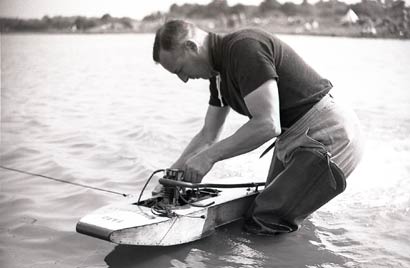
Any perusal of results from past hydroplane regattas reveals the names of several competitors active over a considerable period of time, even extending to several decades. In some cases a whole family of boats and engines of the same series were used such as Arthur Cockman with 'Ifits 1-9' and the Nobles with an equal number of 'Bullrushes'. Others, a variety of boats under different names, but one of the most successful competitors used just one boat throughout his entire competitive career that lasted from 1936 until cut short by ill health in the early 50s. The boat was Faro, and this is a look at how, with continuous development to the engine and alterations to the hull, Ken Williams more than doubled its speed. In a 1994 edition of ‘Hydro Topics’ Peter Hill described 'Faro' in some detail and then went on to highlight its racing career. With the reappearance of the boat in 2005 it was felt that it would be a suitable subject for a more detailed ‘Historic Hydros’ treatment.
|
|
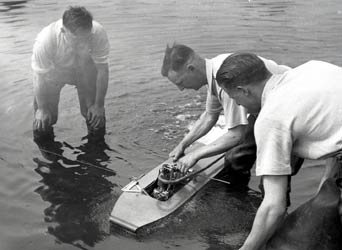
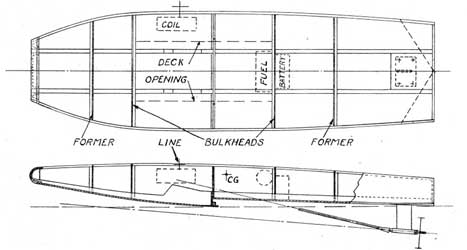
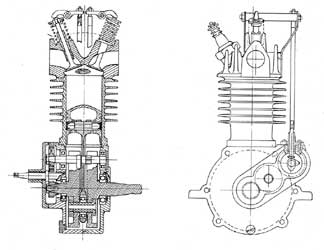
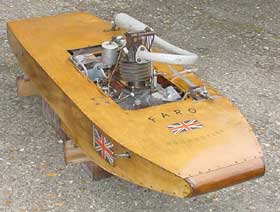
In 1935, Ken Williams of the Bournville Club built a hull and 30cc four-stroke engine to the ‘A’ Class rules. He named the boat 'Faro', after a 19th century card game. The hull is a scow type with sides tapered at the bow and stern and was constructed solidly with mahogany transom and formers, whilst the engine bearers and stringers were in American whitewood. Bulkheads, hull sides and deck were 1/16th Birch ply while the bottom panels were 4mm Birch ply. The sturdiness of the boat can be judged by the all up weight, which just crept in under the class limit at 15 3/4lbs.The 30cc OHV four stroke power unit is essentially a scaled down motorcycle engine with a crankcase of magnesium alloy and a twin flywheel crank. |
The drive end of the crank was fitted with a thin aluminium pulley for starting, coupled to a 3/16th drive shaft. A high camshaft was gear driven from the front end of the engine with the contact breaker for the coil ignition running off the idler gear. Barrel and cylinder head were cast iron with an aluminium piston giving a compression ratio of 5:1. The home built carburettor and float chamber used #1 spirit fuel, pressure fed from a cylindrical tank by an inflated football bladder. Oiling to the bearings and camshaft was ‘total loss’ by a single stroke pump.
|
|
|
|
Plan and side elevation of the hull |
Side and front elevation of engine |
The first run for 'Faro' was in June 1936 when it achieved 25 mph, satisfactory for a first attempt but not competitive. A new piston, changes to the carburettor and a new automatic advance retard mechanism raised the speed to 32.8mph at the Grand Regatta, eliciting the comment that he had "put up a good show for a beginner with a new boat". In September at the North Staffs regatta, 'Faro' recorded its first win, beating Gerry Buck in the process. These speeds were well below what Mr Williams was hoping for, so during the winter of 36/37 a major development of the engine was undertaken.
For the 1937 season another new piston was made, the carburettor choke was opened out still further and a new camshaft installed. With all these changes and a more efficient prop 'Faro' was up to 35 mph, sufficient for third places in both the International race and the Speed Championship at the Grand Regatta. Further tinkering produced a run of 41.15mph for 1st place in the 1937 ME Speedboat Competition, still short of the 47mph from the Innocent Brother’s and ‘Betty’ the previous year. More development work took place during the winter of 37/38, but the 1938 season was to prove one of continuous problems and disasters.
|
|
What was apparent, especially at higher speeds, was the instability of the hull. The boat would capsize regularly, with the subsequent hydraulic locks doing grievous damage to the engine. One spectacular incident at Wicksteed saw the cylinder head blown clean off. Changes were made to improve the behaviour of the boat but the problem was to dog 'Faro' for a further ten years until the adoption of a two-point bridle. |
|
The damage from Wicksteed was repaired within a week, and at the International 'Faro' managed a leisurely 3rd place. An engine bearer broke at the next regatta and in the Grand another capsize ended a pretty disastrous season. The only successes of the year were first places at Altrincham and Farnborough. 'Faro' was showing her age with the engine bearers broken and the rear plane delaminating. No time had been available during the season for proper repairs so plastic wood was much in evidence. It was Ken Williams’ intention to run an entirely new 30cc boat in 1939 so "the old tub" was laid up whilst he continued work on the replacement. This was to be an entirely new departure for him, still with a four-stroke engine, but no further details were given and no evidence exists that the boat was ever finished. |
|
|
At some stage it was decided to abandon this new venture and so 'Faro' came out of retirement for the first time and was put into running order for the new season. At the Swindon Regatta in May no time was recorded whilst a trip to Victoria Park later in the month resulted in another capsize on the first run and a very slow second run. A short journey to the ‘home’ Bournville Lake did not produce any better results, with no time being recorded there either. The decision to reinstate 'Faro' was possibly a time consideration, as in August 1938 Ken Williams had taken over the task of writing the Petrol Engines and Hydroplane Topics for the Marine Model Magazine, succeeding John Innocent, co-builder of 'Betty'. During the same period Ken also produced a detailed series of articles for Model Engineer describing the building of 'Faro' and its engine. |
|
|
|
At the MPBA International 'Faro' performed better with a silver medal in the 5-lap race and a bronze in the 3-lap event. After a capsize on the first run of the 3 lap event the second run produced an identical speed to the 5 lap event, good enough for a bronze medal. Finally, the West Midland MPBA regatta in July proved surprising for Ken, as he had come to the conclusion that the boat was "was worn out and running downhill fast". 'Faro' proved that "there was life in the old dog yet" by exceeding her previous best, setting a new pond record on the first run of 43.75mph, later upped to 43.8 on the second. |
With war just weeks away, 'Faro' put in a run at 42mph to win first place at the Farnborough August regatta. For all the work and hours of machining 'Faro' finished 1939 just 2mph quicker than it had achieved in 1937. For some obscure reason known only to ETW, the boat did not qualify for the 1939 Speedboat Competition, although a ‘Special Certificate’ was awarded for a run at over 45mph that would have gained Ken Williams a second place in the A class.
The outbreak of war curtailed much of the racing activity, but Ken Williams persevered with 'Faro' and made yet another new piston taking the compression ratio up to 10:1. This seemed to provide the extra urge that Ken was seeking and in Nov 1940 finally beat the 47.47mph set by the Innocent Brothers and Betty in 1936, but only by the smallest margin.
|
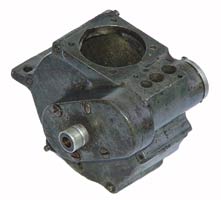
With no official regattas taking place, 'Faro' was run at Bournville each year to promote the ‘Brighter Birmingham Holidays At Home’ programme until in 1944 the crankcase suffered a fatigue fracture of one of the mounting lugs. Vibration from the engine had been a constant source of difficulty with at least three sets of mild steel engine mounts cracking, as well as the carburettor stub and body, exhausts and other ancillaries succumbing, but the destruction of the crankcase was the final straw and Faro was put into honourable retirement and Ken Williams used his time to produce a set of full sized detailed drawings of the engine which he completed in September 1944. Right: Crankcase sans lug |
|
With the war nearing its end the Bournville Club held a regatta in 1945 where, without a boat, Ken Williams could only stand and watch. With a firm date set for another regatta at Whitsun 1946 he decided that there might still be life left in 'Faro'. A lot of work was required to get the boat on the water including casting and machining a new crankcase, as well as another new piston and redesigned valve gear. For all this the boat was significantly slower so a third cylinder head was built and a petrol benzole fuel mix introduced and soon 'Faro' had exceeded her previous top speed.
 |
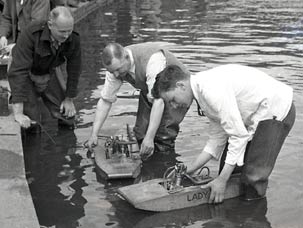 |
| Bournville Whitsun Regatta around 1947 | |
In July 1948 the hull was fitted with a two-point bridle and the stability problems were on the way to being overcome. November 1948 saw another landmark, setting a new ‘A’ class record of 51.1mph, the first homebuilt British boat and engine to exceed 50mph. During the 1948 season 'Faro' was run at 6 regattas, entered 7 races gaining 6 first places 1 second place, and first place in the 48 Speedboat Competition, an enviable record.
|
|
The 1949 season was equally successful with 'Faro' running faster than ever. In May ‘In Search Of Speed’ was published in Model Engineer in which Ken Williams described in great detail the development of the boat and engine up to that stage. At Bournville the boat set a new ‘A’ class record at 56.8mph, but lost the outright record to a 70mph run by George Stone with the ‘C’ class Lady 'Babs 2'. With George Lines’ 'Sparky' taking ‘B’ class at 58.7mph the outright record would not go to an ‘A’ class boat again. Ken Williams knew that the design of the boat was outdated and he did consider building a new three-pointer hull, but "lacking time", 'Faro' continued to be raced. Bridle attachments were changed and new fuel and oil tanks and oil pump fitted around this time. |
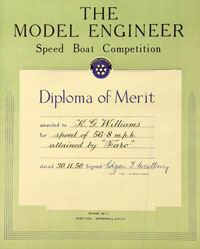
By 1950 Edgar Westbury was being disparaging about the veteran boats still running, as they could not match the speed being reached by the more modern boats, but what they lacked in speed was often overcome by reliability. 'Faro' and 'Betty' were still recording wins through ‘staying the course’ and in September Ken Williams took his boat to France for the Paris International Regatta where it set another new class record of 59.21mph, which remains the highest speed the boat ever attained. How it must have galled ETW to have to sign a diploma for this ‘veteran boat’, recognising another first place in ‘A’ class in the 1950 ME Speedboat Competition.
Ken Williams was very busy throughout 1951 travelling extensively in Britain as well as another trip to France where he finished second, beating Gems Suzor. Consistent runs in the mid to high 50s led to numerous duels with Betty and Ernie Clarke’s Gordon 2 with top three placings being swapped regularly. The high points were runs of 58.1mph at St Albans and 58.77 at Derby which confirmed that although Faro really had reached its peak for speed, reliability kept the awards coming in with twelve top three finishes, and another ME ‘A’ class diploma, although 'Gordon 2' took first place at 70.1mph showing just how 'Faro' was struggling for outright speed.
|
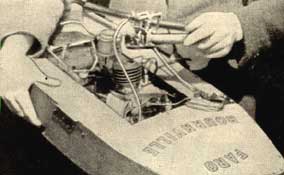
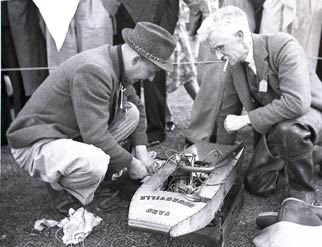
The 52 season got under way at the Bournville Whitsun regatta with the connecting rod breaking. A rebuild saw the reliability of the boat come in to play at the International Regatta when very bad weather knocked out all but three boats, leaving 'Faro' in third place. At Wicksteed Park a 2nd place was followed by another ‘A’ class award at the St Albans Hispano/Ford meeting with a 53.7mph run, which turned out to be 'Faro’s' last competitive run. The two veterans 'Faro' and 'Betty', both now 17+ years old, recorded their highest speeds of the season at this regatta. The last photo of Ken Williams with Faro in the configuration that it finished its last race |
|
The racing record of 'Faro' is comparable with 'Betty', which must make it one of the most successful boats ever, but this was the last time Faro was to be seen as Ken Williams unfortunately suffered a heart attack after the Hispano Suiza regatta at St Albans on 26th July 1952, and 'Faro' was consigned to a shed with fuel, oil and the battery still in place, and there it was to remain. Ken and his wife later moved to Stourbridge taking 'Faro', and all the spares with them, yet nothing apparently was done to clean up or preserve the boat.
The work involved in creating the engine originally and then manufacturing new crankcases, several new heads and valve gear plus numerous pistons and ancillaries as well as the alterations to hull and running gear is quite staggering. It did help that Ken Williams ran a foundry, which allowed him to produce the castings he required, as well as providing sets for others to build similar engines. Competing at that level with that degree of success over nearly 20 years was an amazing commitment and one can only conjecture what the result might have been if Ken Williams had built a new boat and engine.
Ken Williams died in December 1965 aged 63, and in 1973 his widow Ethel sold 'Faro' and most of the spares for the princely sum of £15 with the intention that the boat would be restored and run in demonstrations from the following year. The boat however languished untouched for yet another 30 years until a chance conversation in November 2005 revealed its whereabouts. 50 years of storage had left 'Faro' in a ‘sorry state’, so an offer was made to restore it that was accepted.
Restoration
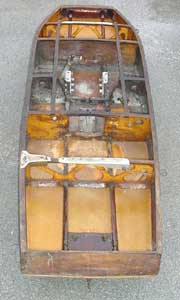
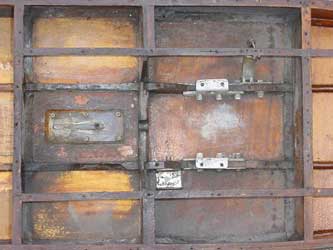
The oil, water and accumulated muck from did not make for a good first impression, especially as the damage from the leaking battery was so evident. A day spent scrubbing with a toothbrush and detergent revealed the true picture that was even more depressing. The rear hull skin was rotted through, delaminated and beyond saving. The front planing step had been replaced with a very thick piece of standard ply put on cross-grained so it would bend to the hull shape. The ply sides were starting to crack and delaminate and worst of all was that there had been a fire in the engine compartment at some stage, so there was no telling what state the wood was in. There was some good news in that the deck was still in excellent condition with the boat name, union flag and gold Bournville lettering still sound. Whilst there is no question that this was Faro, the boat was a bit like the 'crossing keepers broom', with nothing much of the original engine left, new oiling systems, new fuel tank, new exhaust system, new skeg and various alterations to the hull.
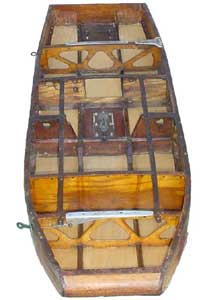
A decision was made that the bottom would have to have new skins, so all existing panels had to come off. The varnish was carefully scraped out of each screw slot and seemingly hundreds of screws removed. The glue holding the skins on was very brittle so split off easily with no damage at all. The stringers showed the number of times the skins had been replaced, as there were screw holes almost every 1/4in. With just the side skins in place, it could be seen where the engine bearers had broken and been patched all those years ago, also one of the bulkheads was snapped. There was still the problem of the fire damage to overcome and here Ken Williams unwittingly provided the answer, although 60 years on. During the last rebuild he had applied numerous thick coats of orange shellac to the inside of the hull and it was this shellac that was burned, not the wood. Some three weeks were spent with dentist’s chisels removing the burnt varnish to reveal the original timber in perfect condition. Shellac is also soluble in meths so the caked on varnish could be removed from the side panels as well. The project was now looking more hopeful and reconstruction could begin.
New panels were cut from well weathered 1/16th birch ply, jig drilled and varnished. All joints were reglued, screw holes plugged and the collection of ‘bodging pieces’ added over the years glued back in place. With all the stringers scraped clean of glue the new skins were attached with Cascamite and original screws. Four coats of varnish finished the new skins and it was on to cleaning the tanks and fittings.
|
|
|
|
The skeg was very rusty but a brass suede brush cleaned it up without damage to the surface and after a long soak in hot detergent the oil in the oil tank gave up the struggle and could be drained out. The advance retard dashpot responded to similar treatment, and was soon stripped and cleaned.
With the aluminium engine mounts degreased everything was ready for reassembly. The later additions to the boat were of very poor quality and it seems that little thought had been given to how they were installed, but back they went with the aluminium nuts and bolts as they had been originally. Amazingly, the football bladder used to feed fuel from the tank to the carburettor was not perished and would still hold pressure. The only change or addition was to add a paxolin base to the battery box so that the battery no longer rested directly on the hull bottom.
The last element was the deck and here again a bit of luck came into play. When the deck had been renewed it had been finished with a yacht varnish rather than shellac so it could be rubbed down gently and then revarnished without damage to the lettering, flag or original surface. More screws and the job was almost done, just a single coat of varnish on the side panels to stabilise the ply and the restoration was complete.
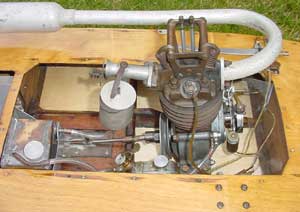
On the 26th March 2006 the hull was returned to the owner and the engine that last ran in 1952 was installed, complete with the aluminium exhaust system, so completing a task that was started in 1973.
|
|
|
I must express my grateful thanks to two people who have made this article possible. Peter Hill for the loan of all the original documentation and his detailed research on the racing career of the boat and Stuart Robinson for the loan of Faro and the related spares. The Westbury family for original photos.
Update:- Amongst the accumulated spares that were obtained with the boat were several original components that had been replaced along the way, and a complete bottom half of an engine. A plan was devised to build a replica hull and incorporate all the existing items, although this was dependant on being able to put an engine together from the assortment of bits. At this stage the project stalled as the person who had agreed to rebuild the motor kept putting it on the back burner as it was, in all honesty, a major undertaking and would have been exceedingly expensive.
|
Time passed with no progress and the whole idea was abandoned. One of those strange coincidences then occurred when Norman Lara revealed that he had a 'Faro' type engine that he had acquired with a collection of other boats and motors. Not quite as simple as it might seem, as this motor had suffered a common malaise of four-stroke hydro motors. It had swallowed a lung full of water at some stage and blown the cylinder barrel clean off its flange. |
|
|
|
|
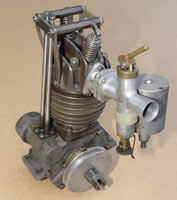
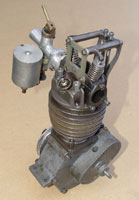
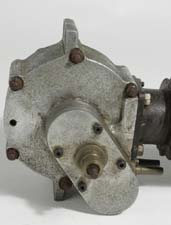
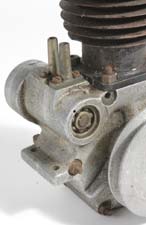
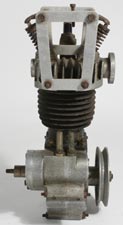
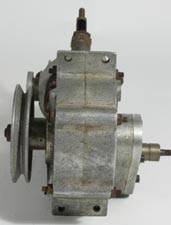
Norman had managed to source a new cylinder from the Faro spares stock, so a deal was done. Could the engine builder make something out of this box of bits? In this case the answer was yes and in due course a fairly complete magnesium Faro motor was collected, which we featured in pitbox in June 09. This is not the end of the story however, as another strange coincidence will attest to. Early in 2011 a four-stroke motor described as a 'Grayson' appeared on eBay. Clearly it was not one of these, and equally obviously, was a more or less exact replica of a Ken Williams derived Faro motor. |
|
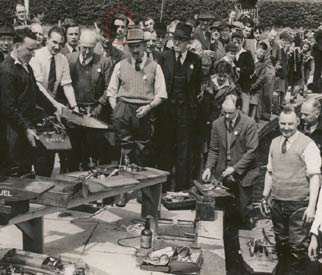
As the motor was such a rarity the correct identification was paramount, so an exchange of emails took place. What unfolded was a fascinating story. Firstly, the motor had been built by the vendors father, who lived in Stourbridge, where Ken Williams lived, so was there a connection? Well, not there, but it transpired that the builder of the motor, Brian Jones, was an engineer who worked at Cadburys in the R&D department and was a member of the Bournville Club. This was also Ken Williams' home club. The amazing coincidences did not end there as a copy of the photo showing a line-up at a bank holiday meeting at Bournville was despatched to the vendor, who immediately identified his father. This is just another example of what makes the work we do so exciting. Bob Thomas extreme left, Brian Jones ringed, Ken Williams extreme right |
|
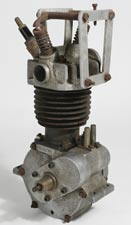
The engine offered for sale was virtually complete mechanically, lacking only a pair of pushrods. The ignition, fuel and lubrication systems were not evident, and it seems that these were never completed. Although intended for use in a hydroplane, that is as far as Brian got with the project. This may well have been because the 30cc four-stroke was almost at the end of its life as a power plant and with a lot of work still to do, Brian's interests turned to other avenues. What is interesting about Brian's engine is the aluminium cylinder head. Ken relates how he was experimenting with this material, yet the only example to hand is very different to the one on this motor. This one looks much more suited to the job. Happily, all the drawings and constructional details still exist, so it did not require too much work to have another complete and working motor, built by a fellow Bournville club member of Ken Williams. Unfortunately Brian was none too well, and his memories of his time at the club limited, but it is wonderful to find this direct connection.
 |
 |
 |
 |
 |
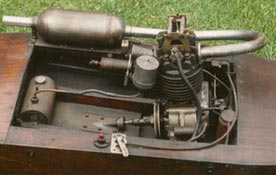
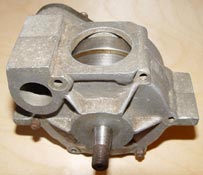
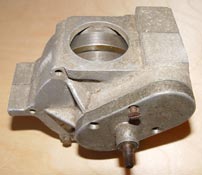
Ken Williams was the manager of a foundry and it was known that he supplied sets of castings to other club members and interested parties. This is the first engine other than his own that can be connected directly with him. There is now one complete engine in Bob Thomas' Enid down in Surrey, the one in Faro plus two other crankcases, the one built by Bill Morris that came via Norman Lara, and now Brian's. Are there any more out there?
 |
 |
 |
| Bob Thomas' Enid | Heavily reinforced part finished crankcase | |
We are extremely grateful to Andrew Jones for all the help and information he has provided for this update.
©copyrightOTW2011