|
Home Updates Hydros Cars Engines Contacts Links Contact On The Wire Evil Spirit |
|
|
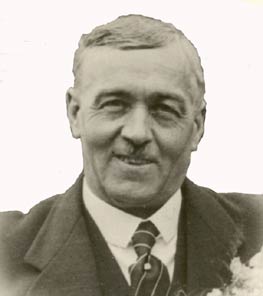
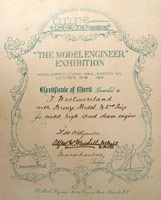
Fred Westmoreland A 91 year old boat led me back to an era before the Wright brothers first flew, before Rolls met Royce and steam was still king. The boat was ‘Evil Spirit’ a flash steam hydroplane built in 1915 by Fred Westmoreland. Although not as well known as his friend H.H Groves, Fred Westmoreland was also an early exponent of flash steam hydroplanes. 'Evil Spirit' was based on Groves’ Irene III and achieved 26.9mph in 1915, to take the British record, earning Fred a Model Engineer silver medal and certificate. The record set was not to be beaten until 1922. However this was not the first boat to carry the name 'Evil Spirit' as I discovered when exploring the life and modelling career of Fred Westmoreland.
Fred Westmoreland. June 1930 |
|
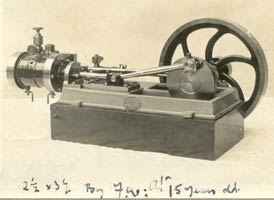
Fred was born on 17th March 1878 in Spalding in Lincolnshire, a town dominated by steam power. From an early age he was interested in mechanical things and used to truant from school to watch the traction engines at work. He started by producing rough patterns that he would cast in lead and this led to the construction of a model horizontal engine that was instrumental in Fred obtaining an apprenticeship. A local doctor attending his father saw his handy work and recommended him to Henry B Massey, an engineer, machine tool maker and manufacturer of ornamental lathes in Spalding. Right: Engine was sold to Leslie Thornhill of Saxmundham, Suffolk in July 1916. |
|
|
|
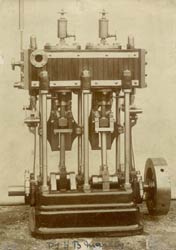
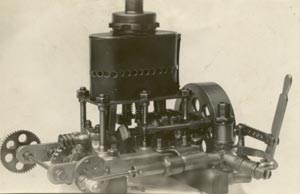
Henry Massey worked on a variety of projects, and Fred gained valuable experience in several engineering disciplines including electrical work. Massey encouraged Fred to carry on with his model building, working after hours in the workshop, and making everything down to the last nut and bolt. After six years training, at the age of 20 he was ready to widen his horizons, and Manchester beckoned. Twin-cylinder built by Massey for small steam yachts. |
|
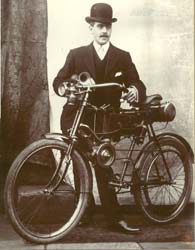
Manchester in 1897/98 was the industrial centre of the world and jobs were plentiful. Fred worked for several companies in a short space of time, keen to gain as much experience as he could. This included a stint at F.H. Royce & Company before it had joined with C.S. Rolls to become Rolls Royce. The Company were making electric motors, cranes, and electric doorbells. Steam gave Fred another nudge and in 1899 he moved down to Birmingham and Bellis & Morcom, working in a new department on compound and triple-expansion engines. Promotion came when installing a new generating station at Middleton and the Corporation asked him to stay on as ‘Engineer in charge’. Having more spare time, he rented a workshop to make model engines, and also build a motorcycle. Right: Fred in 1904 with 'motorised bicycle' |
|
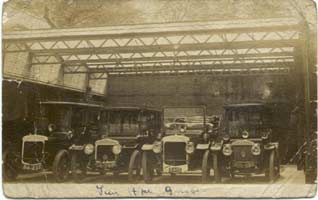
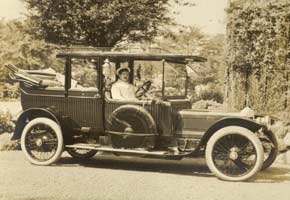
1902/03 saw him back in Manchester at a new British Westinghouse plant in Trafford Park. The next move, prompted by a desire to have more internal combustion engine experience, took him to Coventry and Daimler. While delivering Daimlers in Salford to a wealthy manufacturing chemist, Mr Thomas Ansdell of Hope Avenue, Pendleton, he was offered the job of motor engineer, looking after the family’s fleet of cars. With better wages, Fairhope Cottage for accommodation, a fully equipped garage and workshop, it was an offer few could refuse.
|
|
|
|
| The garage at Fairhope. | Fred with Daimler 'Landaulet'. | 3,000 mile service? |
|
|
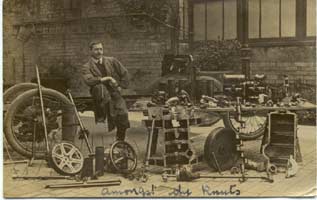
Fred completed the change by getting married in 1907 to Emily Bourne, also from Spalding, and having two children, Edna in 1908 and Frederick William in 1910. Now that he was settled and with a very well appointed workshop, Fred was able to indulge in his passion for model engineering, building around 23 model engines. As well as steam engines he produced a number of advanced IC engines and other mechanical and electrical items. His work was of such high standard that he would win some 32 awards, including seven Model Engineer, silver medals. He was a well-respected and active member of the Manchester Society of Model Engineers, and became its President in 1921 and 22. |
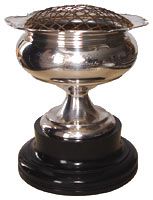
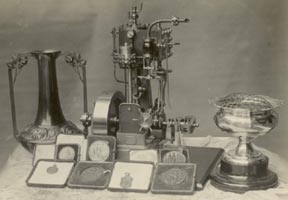
The high speed, reversing steam engine shown below brought Fred his first major awards including winning the 'Rose Bowl' at the Edinburgh Industrial Exhibition in 1910.
|
|
|
|
|
| Edinburgh Rose bowl | High speed engine and awards. | M E Exhibition 1911 | Fred in 1913 with Evil Spirit |
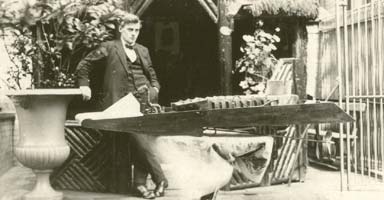
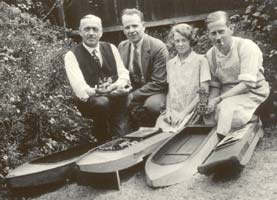
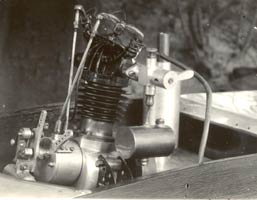
Fred's involvement with hydroplanes started around 1911/12 after winning a launch style hull made of tinplate as a prize at one of the many model engineering exhibitions he entered. He is seen seated above right with members of the Manchester Society of Model Engineers, speed boat section in 1913, holding the first petrol powered boat that he called 'Evil Spirit'. The first 'Evil Spirit' was equipped with a very early IC petrol engine. The 1 3/8th inch bore and stroke horizontal single cylinder motor with atmospheric induction was similar to that used by Ted Vanner in the 'Leda' boats and almost certainly derived from the 'Belvedere'.
|
|
|
Fred used his own idea of a combined carburettor and water cooling device, which aided evaporation of fuel from the surface carburettor. Two ounces of fuel and five ounces of cooling water were sufficient for a run of around a mile. In November 1913, Henry Greenly reported in Model railways and Locomotives that- "The present record run of this boat was made on Trafford Lake last February, when on a circular course it did 300yards (part of a 1000 yards trip) in 42 seconds, a speed of practically 15mph". The boat was later sold to Herbert Waller of Farningham in Kent who fitted a steam plant and renamed it 'Darenth'. By 1923, it was in Scotland, having been sold to the manager of The Shale Oil Works up there.
The period leading up to the first world war was a time for innovation and experiment as internal combustion engines were still in their infancy and tethered hydroplane racing was just beginning. Fred joined the pioneers and soon formed friendships and working relationships with other modellers who were to become household names in many different aspects of model engineering. As well as Ted Vanner and George Noble it was to be his good friend H H Groves who proved to be most influential in the way Fred's boats developed.
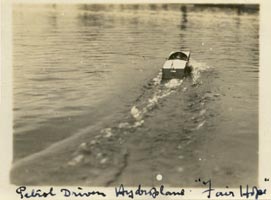
The launch type hull of 'Evil Spirit' was outpaced by the functional hydroplane hulls such as the 'Follys' and 'Irenes' and it was this style of hull that Fred adopted for his second boat that he named 'Fairhope' after where he lived in Pendleton. The hull design was a direct copy of Groves' 'Irene II' but with an IC engine and associated equipment replacing the flash steam plant of the original.
|
|
|
|
'Fairhope' in its first incarnation
with the motor from the original 'Evil Spirit'. Atmospheric induction and ignition by accumulator and trembler coil. |
|
|
With a bore and stroke of 1⅜" giving a capacity of just under 34cc, the engine that had seen service in Fred's original metre boat propelled the newer style hull to a speed of 15.59mph in Class D of the 1914 speed boat competition.
The IC engine however was proving no match for the flash steamers being run by Groves and Noble which prompted Fred to adopt this type of power plant for his next and best known boat also given the name 'Evil Spirit'. |
|
|
|
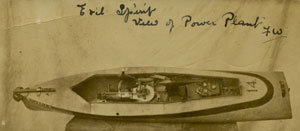
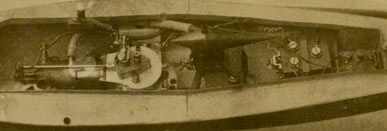
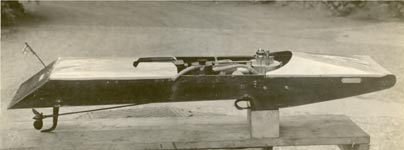
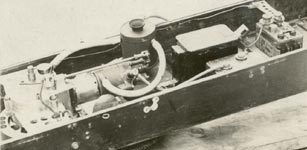
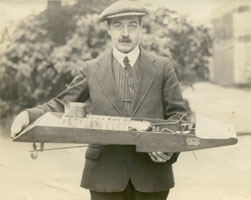
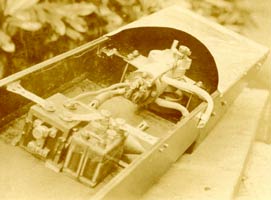
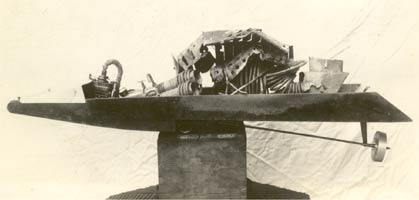
'Evil Spirit' was again a direct copy of 'Irene II/III', even down to the twin cylinder rotary valve flash steam motor. In the Model Engineer speed boat competition for 1915 the boat recorded a speed of 25.06mph to claim a British and World record, ironically beating the mark set the previous year by Herbert Groves and 'Irene'. Fred with 'Evil Spirit' in 1916. |
|
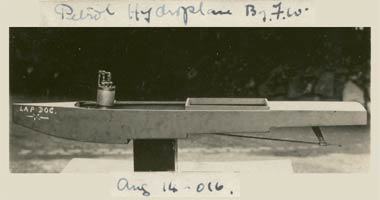
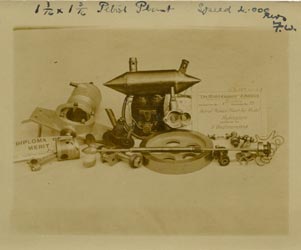
This period was an extremely productive time for Fred as he was working on at least four different IC motors, developing and rebuilding the 'Spirit's flash steam plant and presumably doing his paid work as well. Even though he had broken the record with steam, he wanted to approach that speed with a petrol motor. To this end he built an entirely new engine and hull. 'Lap Dog' was boat shaped rather than rectangular but had no less than three steps. It may well be that the boat was never run and that the 1. 3/16" bore and stroke engine eventually found its way into 'Fairhope'. |
|
|
|
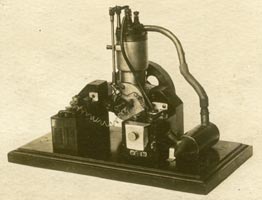
In 1916, Fred wrote a series of articles for the Model Engineer. These contained details about his engines, the building of Evil Spirit and a report on the Manchester SME exhibition. His own entries were a high-speed steam engine, ‘Evil Spirit’ and 'Fairhope’s' new complete water-cooled, petrol power plant. The aluminium crank chamber and water jacket had been cast as one piece and the cast iron cylinder was screwed into the base of the water jacket. When run, the noise and fumes given out by the exhaust apparently caused some comment, the engine being well lubricated with castor oil. |
The later 'Fairhope' motor was based on the Stuart Turner AE, but with a one piece engine casting. Atmospheric induction was still being used as was the original ignition setup off the accumulator and trembler coil. There was no exhaust system at all, hence the comments above.
|
|
|
|
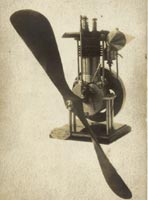
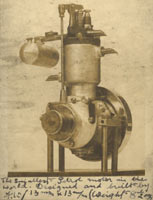
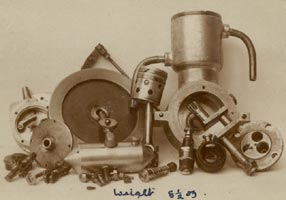
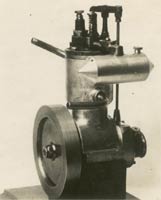
One of Fred’s award winning models was an air-cooled aeroplane engine weighing just 3lbs. It was exceptionally well engineered and incorporated most ‘current’ features to give it an impressive performance. Professor G Asakaw an expert on internal combustion engines later bought it for the research department of Owens College, Manchester, complimenting Fred on the fact that it was the finest small petrol engine he had ever seen. He placed an order for six more engines saying they were for experimental work in a Japanese laboratory, but Fred refused, as he didn’t have the time. As well as the aero engine, Fred built what was claimed to be the 'smallest petrol engine in the world. With a bore and stroke of just 13mm the capacity for this water cooled four-stroke worked out at just 1.7cc. A slightly bigger version at 2.3cc was sold to Gamages of London, and the production version is featured in their catalogue.
|
|
|
|
|
| Aero engine. | The smallest petrol motor in the world. 1.7cc 4-stroke | 2.3cc. Sold to Gamages. | |
|
|
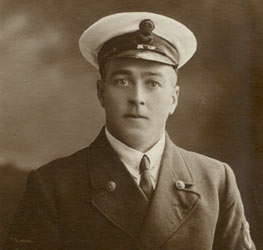
WW1 intervened, and in 1917 he joined the Royal Naval Air Service, starting at HMS President II and then moving to Daedalus, both shore based training establishments. Spending time at the aero engine school in Crystal Palace the gunnery school, Chatham and then the armourers school, Eastchurch. Emerging as a Leading Air Mechanic, Fred ended up at Calshot, which in 1918 became an RAF station and a centre for flying boat operations. Fred was demobbed from there in 1919 back to the Salford estate. |
|
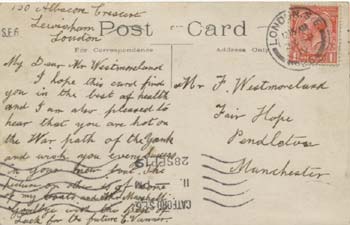
During 1919 Fred became aware of an American boat called 'Elmara' claiming to have beaten 'Evil Spirit's record by achieving over 30mph. It transpired that the boat was an almost exact copy of 'Evil Spirit' and the 30mph was not over a complete run. Fred had regularly beaten this speed but again never over an official distance. He obviously voiced his intention to set a new record and beat 'Elmara', hence the comment from Ted Vanner on this postcard sent in September 1919. Evil Spirit had been put into honourable retirement and so another hydroplane was soon under construction. |
|
|
|
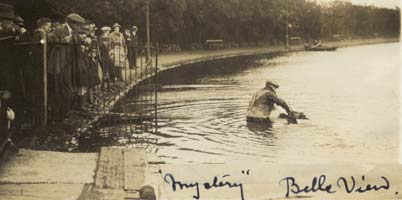
The new boat was again flash steam with a uniflow engine, but a new departure because it was a twin-cylinder, poppet valve job designed by Thomas Hindle, who had also done the drawings for Evil Spirit. The new boat Mystery, although it put in some fast practice runs, seemed to suffer from what Fred described as ‘exciting experiences’. The end came when it turned a full sized rowing boat over, and tipped its occupant into the water. This along with another unspecified incident caused the park authorities to ban hydroplanes from the public lakes. Fred blamed the accident on the unfortunate rower, and stated that he would not race again until a safer venue could be found. |
|
|
|
|
|
|
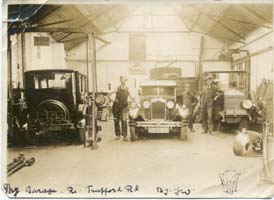
With the death of his employer Mr. Ansdell, Fred, in partnership with a Mr. Robinson, setup a vehicle repair and service garage in Trafford Road, Eccles. He continued to build steam and IC engines but did not compete in any further hydroplane events, although he would occasionally give demonstration runs with 'Evil Spirit' at regattas through to 1934.
 |
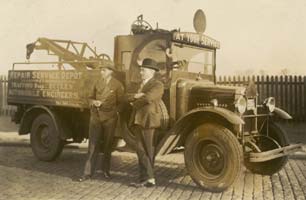 |
| Garage in Trafford Road | Fred with his breakdown lorry |
|
|
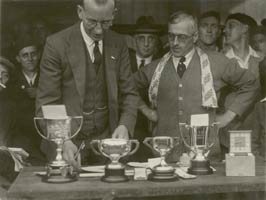
'Evil Spirit' also ran at Brockwell Park, Dulwich for the 1934 Grand when Fred was invited to present the prizes. Fred is seen here on the right
with George Lutz, Stan Clifford, the 'Chatterbox boats' and 'E BY GUM'. |
|
Fred was a very ill man by this time, and unable to travel to the 1935 Model Engineer exhibition but with father directing and son doing the work, they managed to build an entirely new 30cc petrol engine and boat, aptly named ‘Two Freds’.
|
|
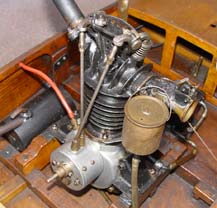
The 30cc single cylinder four-stroke engine, reflects the developments that had taken place since the days of 'Fairhope'. Inclined overhead valves, a carburetter, and ignition by contact breaker and coil. On its first outing 'Two Freds' completed 38 laps, and later in the season achieved a speed of 19.35mph. In the 1936 Fleetwood Regatta, endurance contest it took first place with a record run of 56 laps.
|
Unfortunately Fred did not live to witness ‘Two Freds’ running. On 6th October 1935 aged just 57, Fred died of cancer. Percival Marshall wrote "Everybody who knew Mr. Westmoreland admired him as much for his kindly and always helpful disposition, as for his exceptional engineering skill."
Fred came into a world dominated by steam driven machinery, but in his relatively short life he witnessed the development of the internal combustion engine from its infancy to total domination. The first two strokes had appeared in 1876, Diesel made his name in 1900, and the first aircraft only flew in 1903. Yet in spite of the rapid advances with IC engines, Fred did not see steam beaten during his lifetime, as flash steam tethered hydroplanes held the outright speed record until 1936.
|
Both Fred’s children were connected with the sport, son Frederick also running tethered hydroplanes and Edna his daughter marrying George C Lutz in 1930. George was a Victoria Steam Boat Club member and used to run a large petrol engined steering boat. This craft was infamous for catching the ‘stopper’ unawares. It had a small open cockpit in the stern, which suggested a convenient hand–hold. If the stopper was rash enough to use it as such, he found to his cost that an extremely hot exhaust pipe lurked beneath. In 1934 George was elected Vice-Chairman of the MPBA. |
|
|
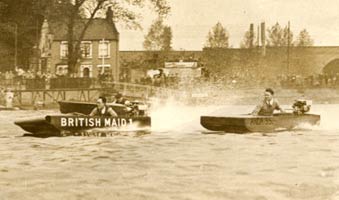
Colin Fairs in British Maid ahead of George Lutz, racing outboard hydroplanes at the Welsh Harp in 1927. |
|
|
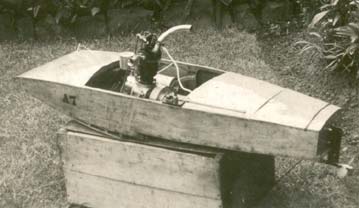
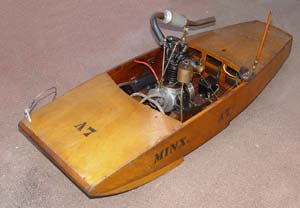
Frederick, who had become a maintenance engineer, continued to race hydroplanes after Fed’s death, joining the Altrincham MPBC. He built a new 30cc boat for the 1949 season, using the original engine from 'Two Freds'. The as yet un-named boat had its first run at Heaton Park Manchester in June 1949. With the engine converted to glow ignition and a new carburettor to allow running on methanol the boat now named 'Minx' came second at the Altrincham Regatta with a speed of 38.4mph, and won the Machin Cup at 39.8mph in 1953. Frederick suffered a fatal heart attack and died in 1969 aged 59. |
|
|
|
|
| Spark ignition and remarkable exhaust pipe. | The boat and engine as it is today, after 50 years in storage. | |
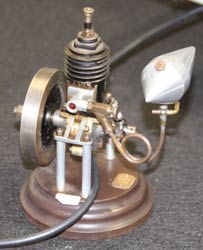
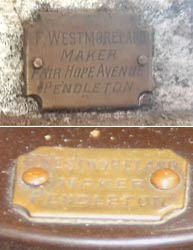
Update: Since the reappearance of Evil Spirit a number of other items built by Fred have appeared. Minx as seen above, a very early two stroke motor that is now in the care of the Northern Association and most recently a steam engine built around 1910 that had somehow made its way to India.
 |
 |
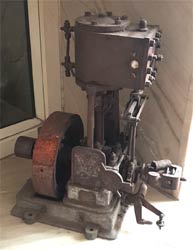 |
| Early two stroke | Name plates from both engines | Steam Engine |
Our grateful thanks to Ken Lawton for providing the archive material that has made these articles possible. Thanks are also due to Peter Hill and John Groves for the valuable information they have provided.
©copyrightOTW2008